Wallets deliver digital credentials. SOWL brings them into your processes.
WALLETS CHANGE HOW INFORMATION IS USED.
Properties are verified once, stored as a credential, and reused. Systems are not designed for this today. SOWL ensures that credentials become usable in existing processes.
Two worlds that don't fit together.
Today, identity works within systems. Accounts are created, roles assigned, and entitlements managed. Every application makes its own decisions. As soon as these need to be used across systems, overhead is created. Information is transferred, verified again, and reconciled manually.
Wallets introduce a new model. Properties are made available as credentials and verified on demand. This model works across system boundaries. Credentials can be used directly in different processes. Existing systems are not designed for this. SOWL brings both worlds together.
SOWL brings credentials into your systems.
SOWL connects existing IAM, KYC, and business systems with wallets. Business decisions stay where they are made. SOWL turns them into credentials that can be shared. At the same time, credentials from wallets are verified and used within your systems. This is how SOWL connects both directions. Generating and using credentials in one consistent structure.
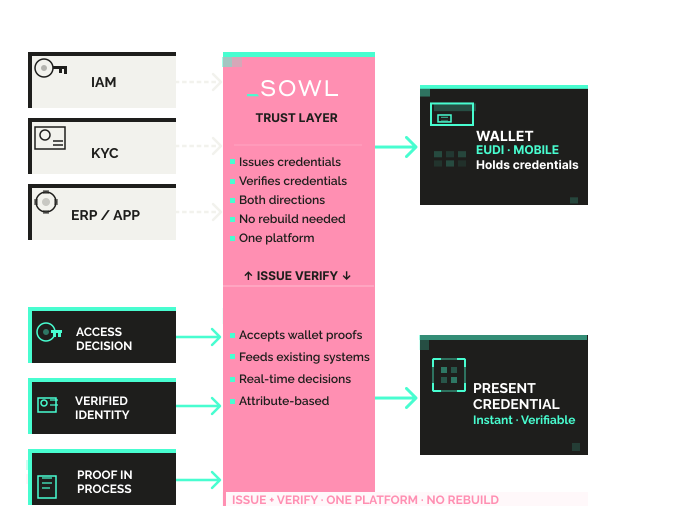
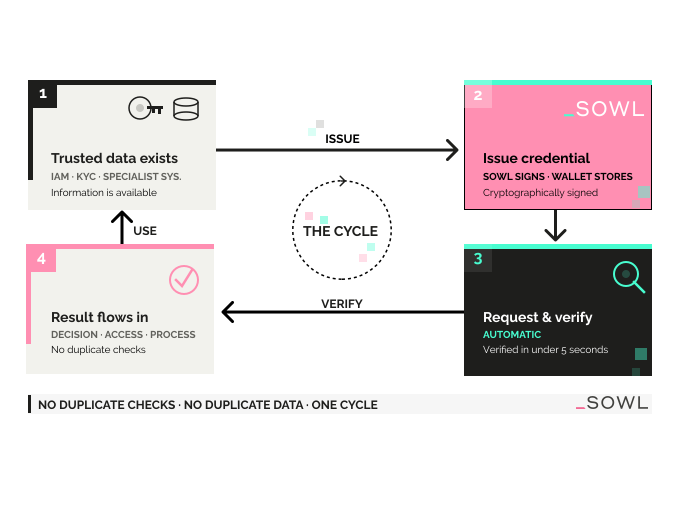
How credentials are created and take effect.
1. Trusted data exists, for example in IAM or KYC.
2. It is issued as a credential and made available in the wallet.
3. A system requests the credential and verifies it automatically.
4. The result feeds directly into existing decisions.
This creates a cycle of issuance and use. Without duplicate verifications and without duplicate data storage.


How SOWL is used.
Wherever credentials should no longer be verified manually. For example, in the KYC context around EUDI and PID. Verifications are converted into credentials and reused.
Or in existing systems, verified credentials feed into access decisions. SOWL ensures that both levels work together. Without replacing existing systems.

Let us take a look at your systems.
You show us where verification happens today. We show you where credentials simplify processes.